
Water hiking
Multi-day touring on the water
Water touring blends endurance paddling with self-supported camping. Plan each day around distance, wind, and how gear is packed on deck.
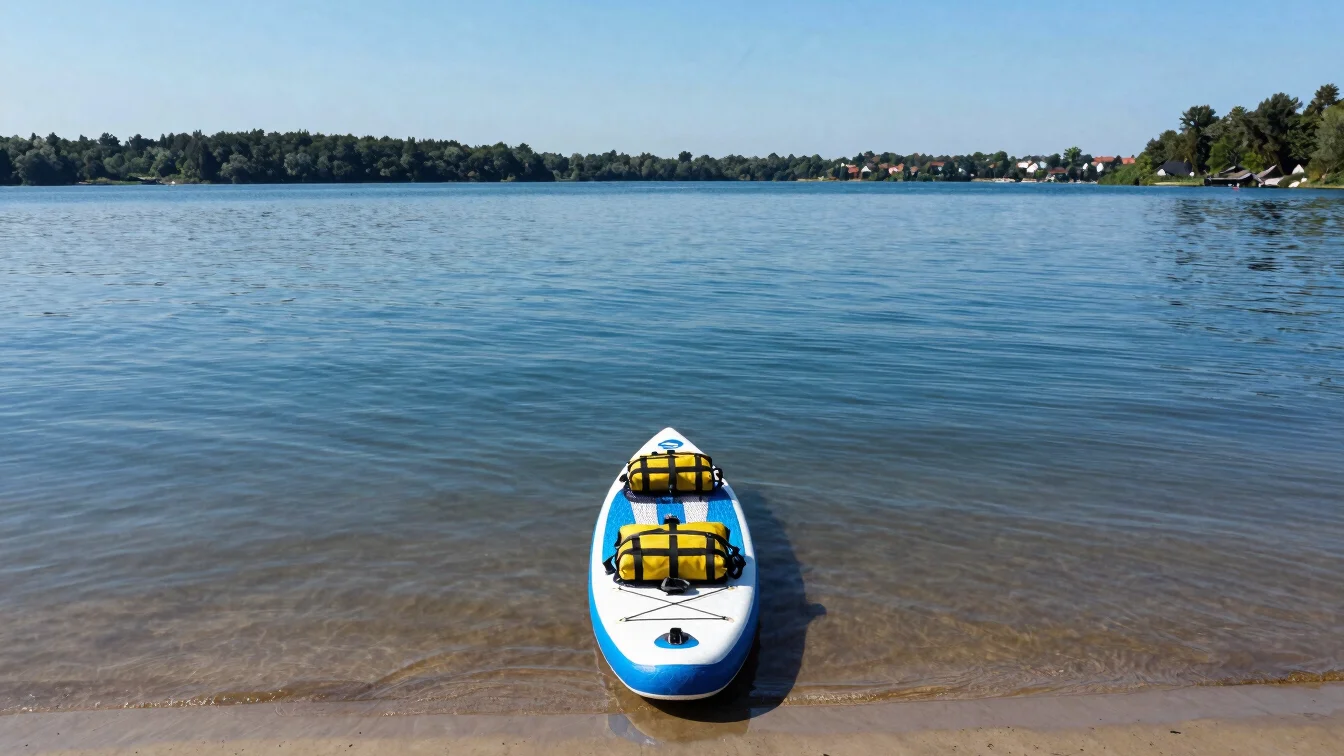
Load
Balanced dry bag distribution
Spread weight evenly across the deck with dry bags secured by straps. A stable board handles better when the load sits low and centered.
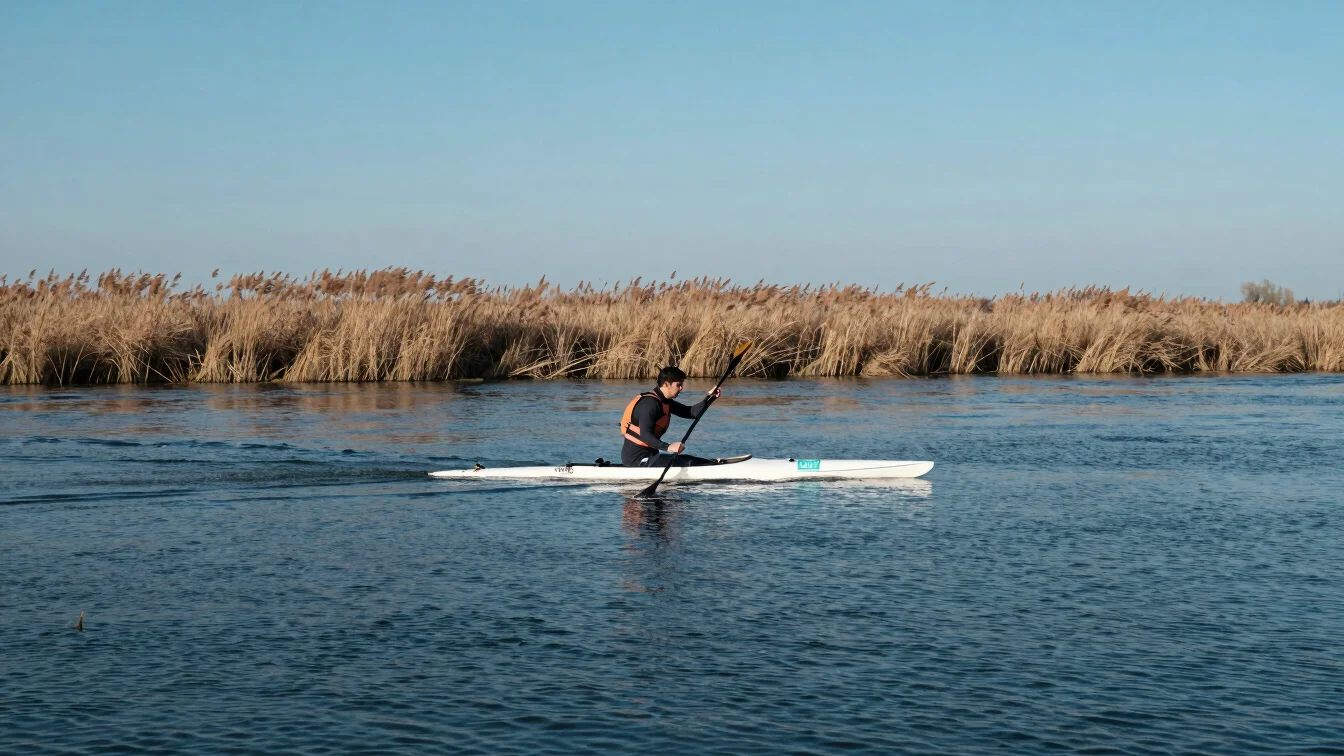
Pace
Pacing a full-day route
Set a steady cadence and build in regular breaks. Check the forecast and local conditions before you leave, and turn back early if wind rises.
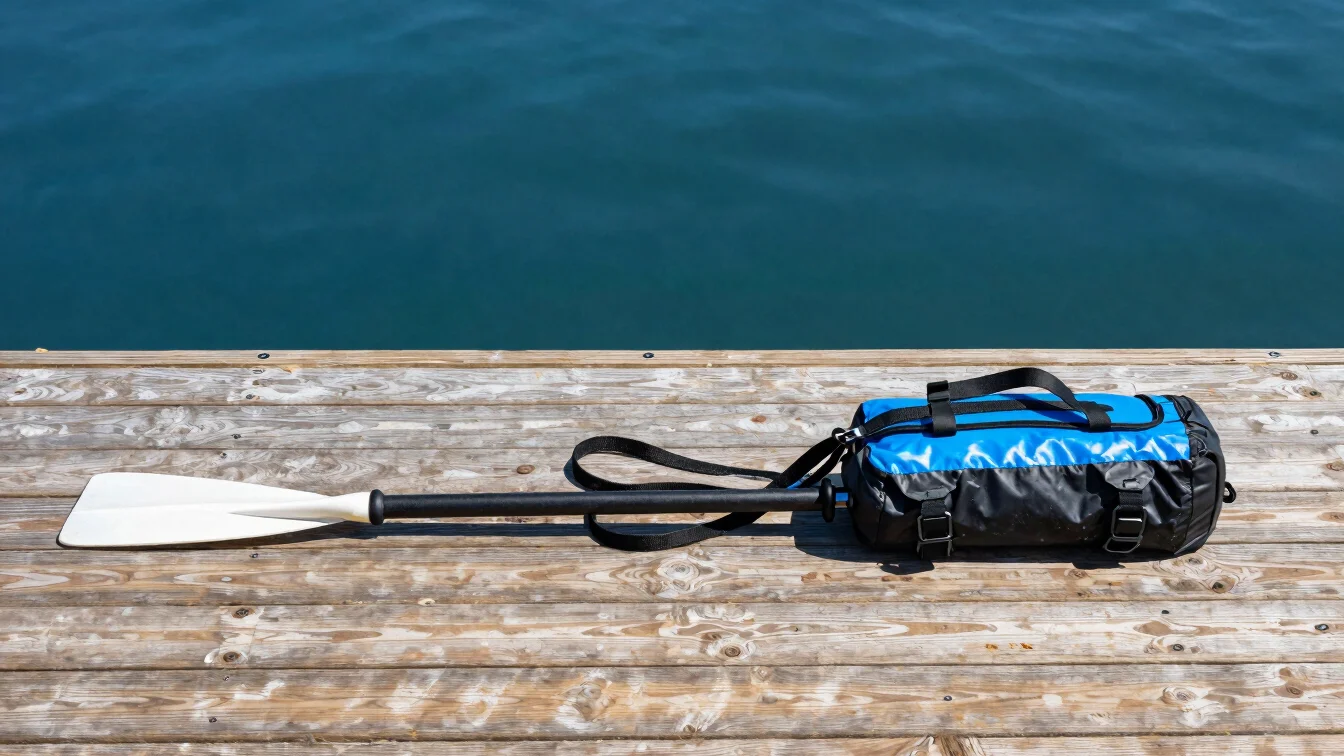
Kit
Essentials for the day
Carry water, a whistle, a first-aid kit, and a repair kit. Confirm local regulations for the waterway before every outing.
Responsible bivouac
Camping with minimal impact
01
Choose a legal zone
Confirm that the shoreline you plan to use allows overnight camping in France, and avoid protected reed beds and sensitive banks.
02
Keep the camp kitchen clean
Cook away from the water's edge, store food in sealed containers, and wash up with minimal soap well away from the shore.
03
Leave no trace
Pack out all waste, including food scraps and litter. Leave the site cleaner than you found it.
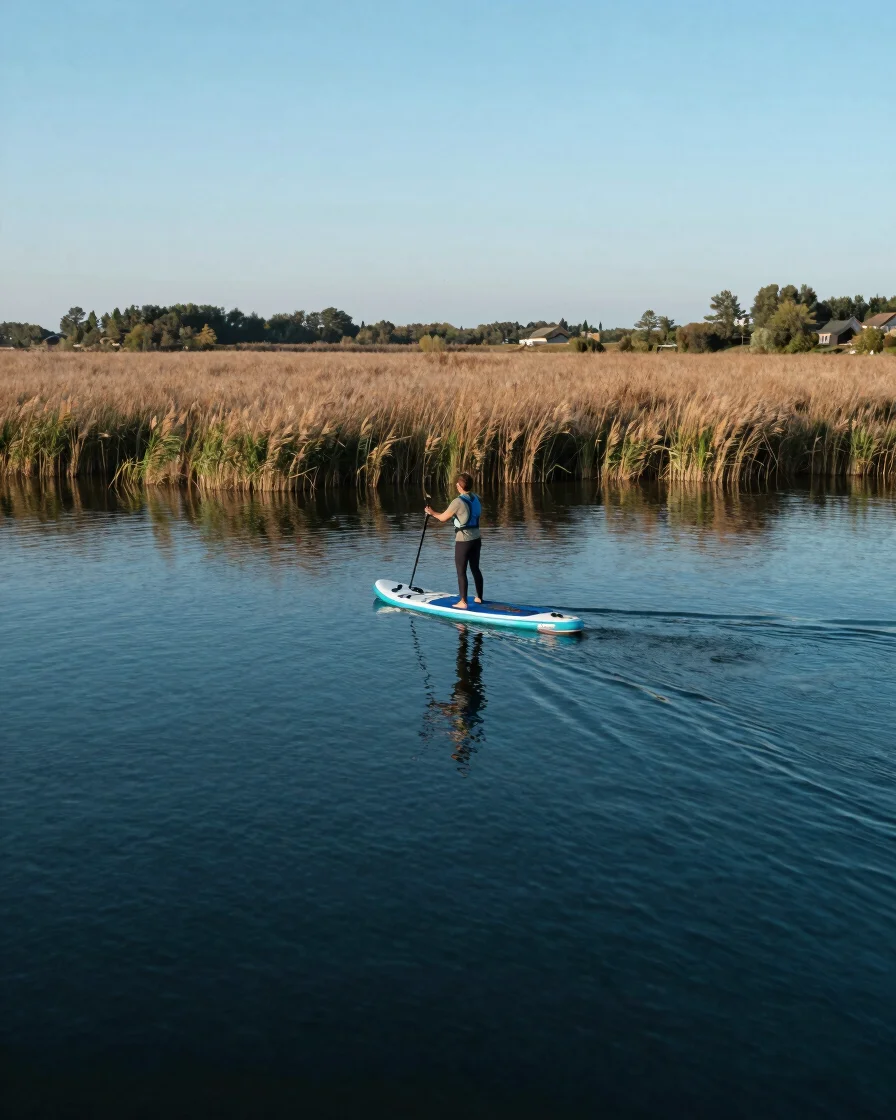
Respect for nature
Paddlers as stewards of the water
Lakes and rivers hold fragile ecosystems. Paddlers can reduce their impact by keeping noise low, steering clear of reed beds and nesting areas, and packing out every item they bring.
Stewardship starts with simple habits: slow approaches near wildlife, respectful distance from vegetation, and a commitment to leaving no trace on every outing.